
Commerce at the Canal
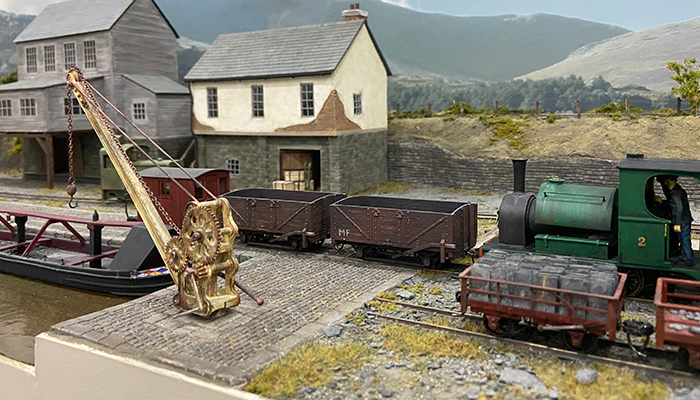
The canal is sparsley populated with buildings, but for Maifford is probably one of the most important assets, since a lot of trade still goes by barge. Slate is transported to the port for transhipment on by sea and other goods are brought up from the ports for onward movement by train.
The biggest building near the wharf, but served by it's own siding belongs to J. Eaton & Co. who have grown to be a large manufacturer and stockist of cloth for the area around Meifford.
Next to Eaton's is the local warehouse for general supplies, which is sent out by train to nearby towns.
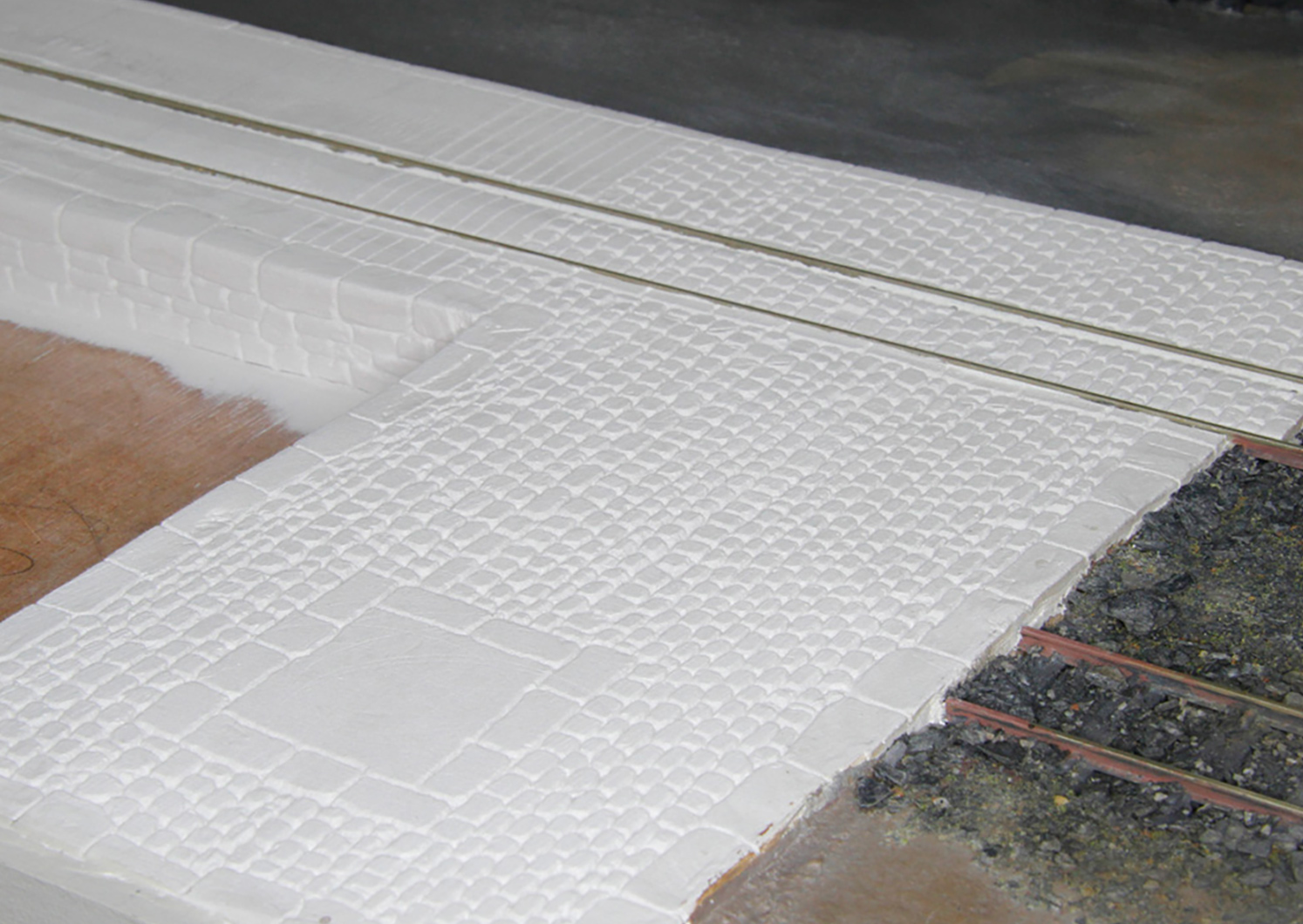
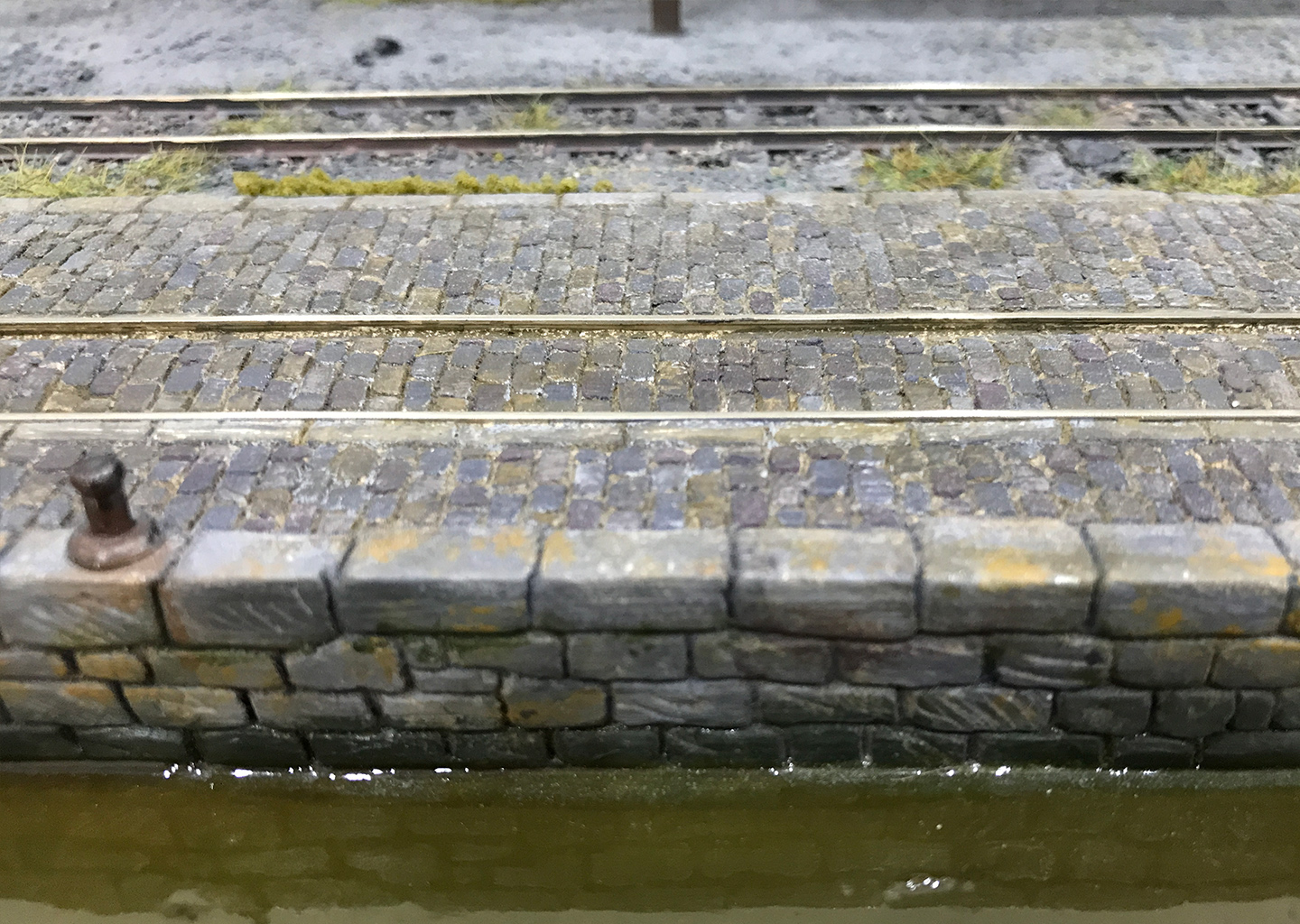
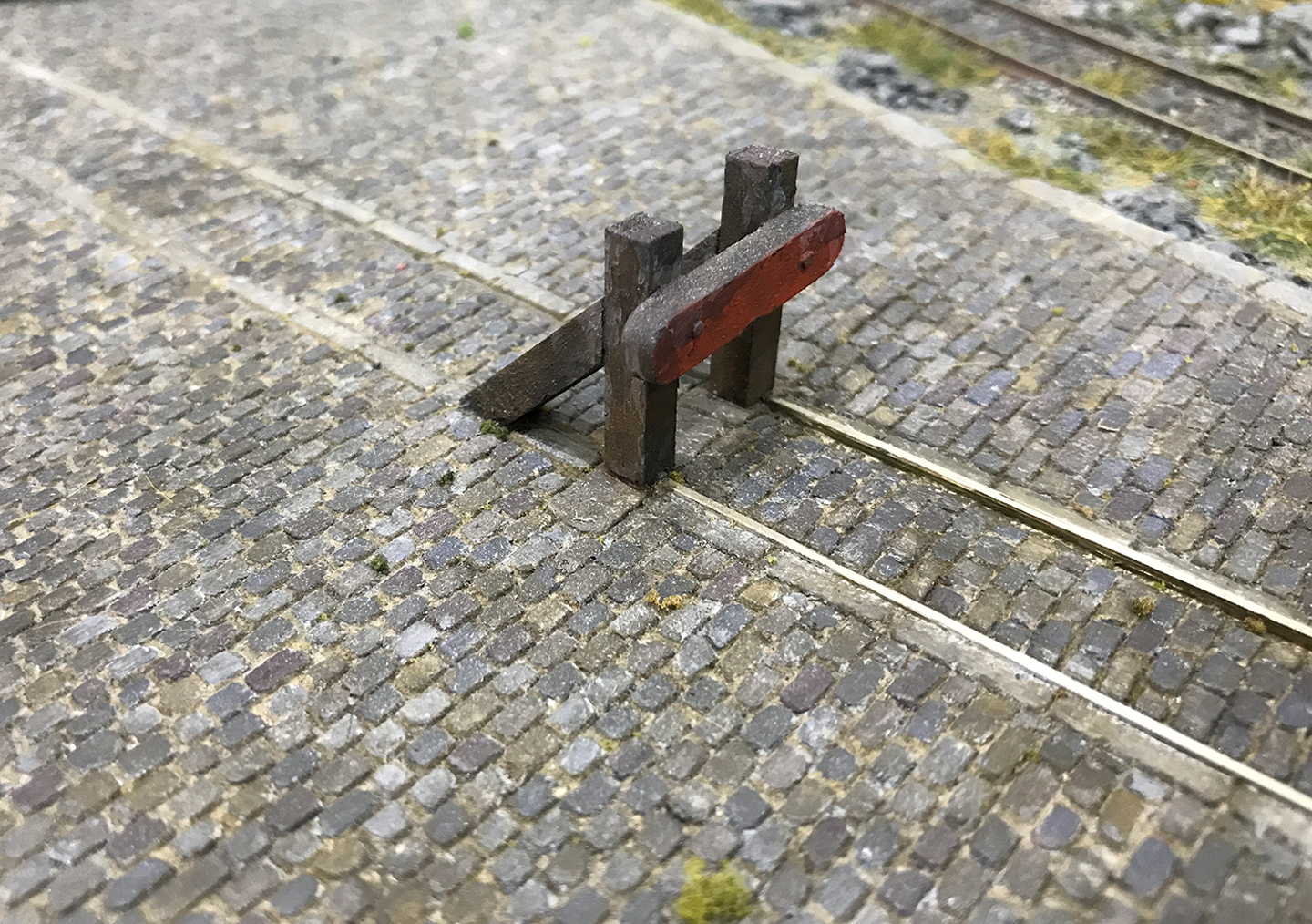
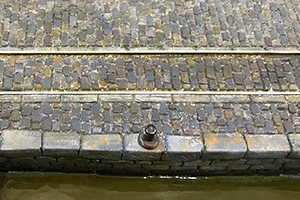
Almost as important as the buildings is the wharf, with inlaid track. The surface is laid with cobbles - more information if you click on the image below -
By far the most important building is located at the end of the wharf - Meifford Slate Works! It is here that locally quarried slate is transformed into the finished roof slartes that are then sent out both by train and barge to their eventual destinations. It probably accounts for most of the rail traffic on the wharf sidings.
To manage goods arriving by barge, or to be shipped out, there is a small goods office where George Thomas hides away during the day, venturing out occaisonally when needed!
Reality ...
All of the buildings around the canal are scratchbuilt, mostly using a foamboard shell, all with internal floors, which give strength to the structures. All roofs are removable to enable access for lighting and eventually fitting out the interiors, these being made from mount board, which has been given a coat of shellac to provide strength and prevent warping.
Tiles are individually cut and laid, for all buildings and where the outsides are clad in wood (Eaton's and Meifford Slate), this has been cut from mahogonay veneer. Nothing looks better than using real wood.
Meifford Slate has a corrugated iron roof and this was made from aluminium serving dishes, cut into strips and fed through a 'paper crimper' and then cut into appropriate sizes.
Stone walls are scribed in to a DAS covering over the foam board, painted in a similar way to the cobbles.
All the windows in the buildings have also been scratchbuilt - I prefer to make windows the size I need for a building, than making the buildings to fit the size of window available. It takes longer but is quite satisfying.
Images from the canal area -